Expecting the Unexpected: A practical (and a bit cheeky) guide to navigating the postpartum
So you don't have to go digging....much of the content from my posts (and workbook) in one place. Will update weekly!

Here’s to everyone out there who is growing their family and enduring the constant barrage of the unexpected, this workbook is for all of us. Just remember- no one really knows what they’re doing, and if they say they do… they’re most likely faking it or straight up lying.
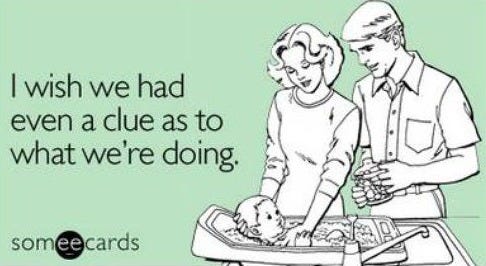
And I guess with that being said… take everything in this guide with a grain of salt😉
Understanding the Postpartum Brain
Many new moms quietly wonder, “Why do I feel so different? I don’t feel like I am even the same person”.”
The truth is- the postpartum brain is one of the most adaptive, complex, and impressive versions of the human brain. Yes, you read that right- the “Mom Brain.”

A brain undergoing major rewiring
Pregnancy and postpartum spark a level of neuroplasticity that rivals adolescence. Certain brain regions become more efficient and deeply attuned to caregiving- especially in those areas related to empathy, connection, vigilance, and reading subtle cues.
This rewiring is not a regression, it’s specialization.
Your brain is reorganizing around what matters most right now: knowing your baby, anticipating needs, and keeping both of you safe.
Heightened emotional attunement
The emotional centers of the brain become more active postpartum. This often shows up as bigger feelings- feeling joy, worry, protectiveness, tenderness- and fortunately/unfortunately all at the same time! It’s intense, and it’s rooted in our evolutionary biology.
You’re not “too emotional” or “too sensitive.” That heightened awareness is part of how humans evolved to keep the offspring alive/perpetuate our species!
A shift in stress sensitivity
The massive hormonal drop after birth and your adapting brain also change how your stress-response system fires. You may feel things more quickly and deeply. You may have much stronger reactions, cry more easily, or feel like small tasks suddenly take more energy. This is not a sign of weakness; it is a sign of your brain and body recalibrating in a season of high vulnerability and high responsibility.
Community support is one of the best ways to moderate this hypervigilant stress response! Being part of a postpartum community is protective- it nurtures resilience, helps extinguish those thoughts of “I must be the only one who is (struggling/failing/spiraling, etc)” and nurtures resilience through connection. I know I am preaching to the choir and tooting my own horn here but there is a reason that I have been doing these groups for all of these years! There is power in these connections.
Yes, your executive functioning improved
The “mom brain” is highly efficient at cutting through noise and honing in on what’s essential. Many parents (myself included) describe it as “I don’t have time or energy for anything that isn’t real anymore ( i.e. BS).”
The postpartum brain in action is lean, purposeful, and streamlined despite the fog, exhaustion and emotional intensity. MRI studies show measurable increases in white matter- this is the “communication highway” of the brain allowing for:
faster prioritization
stronger problem-solving
heightened ability to detect patterns
quicker decision-making under pressure
sharper focus when something truly matters
The myth of “mom brain”
What many people label as “mom brain” (forgetting keys, losing your train of thought mid-sentence, general fogginess, etc) is nearly always the result of:
sleep fragmentation
sensory overload/overstimulation
chronic multitasking
hormonal transition
a constantly activated stress-response system
None of these are intelligence issues…they’re essentially resource issues!
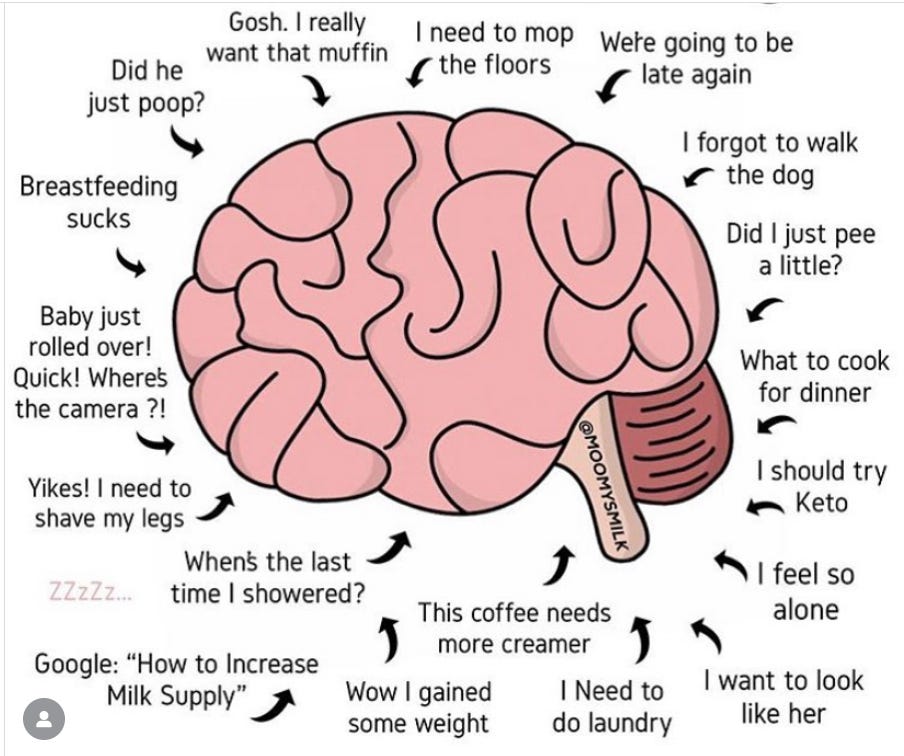
What this means for you and me and all the other moms out there…
If you feel more emotionally aware, more vigilant, more intuitive, or more decisive about anything that impacts your baby- that’s the brain’s structural changes in action.
If you feel foggy about everything else, well, that’s exhaustion, not regression. Both can exist at the same time.
The postpartum brain is both powerful and taxed. Specialized and stretched. Tuned-in and tired.
Understanding this duality might help you feel a little less self-critical and more grounded in what is happening. Brains are cool. Mom brains are incredible.
If it feels like too much though, that matters
Understanding the postpartum brain is empowering, but it’s not meant to minimize suffering. If you’re experiencing intrusive thoughts, dread, persistent anxiety, numbness, or overwhelm, those are signals your nervous system needs more support-NOT a sign you’re failing or are not a “good mom.”
Identifying Needs
Ask yourself these questions:
What are you most excited for once the baby is here? Or if baby is already here, what is the best part about having baby? Ex: baby falling asleep in my arms
What are you most concerned about for the postpartum period? Or if baby is already here, what has been the hardest part? Ex: how lack of sleep will impact my mental health
What do I do now that helps me be me or helps me feel whole? Ex: shower when I wake up, hot coffee, going to my book club, yoga class
What are the things that you need from your partner that help you feel supported/cared for? What’s the love language you respond best to? Ex: long hugs/being held. Just listening-not trying to “solve” the problem
What are the things that you can do in 3-5 minutes that help you when you are stressed? Ex: fresh air, going on a walk.
How do you typically handle change/transitions? And what helps? Ex: usually become very anxious- doing breath work/grounding exercises. Calling my mom.
What are certain things that you do that are “non-negotiable” (aka need to do them in order to function)? Ex: taking a shower/putting on makeup, making my bed, drinking coffee, etc
What is something that you love and value about your personality? if you’re feeling off, what helps get you back to this? Ex: good sense of humor, curious, optimistic
Finding Support
Postpartum groups I have heard about?
Who are my “call in a crisis people”?- think “I feel safe ugly crying in front of you” (Examples could be your mom, your childhood best friend, your sister, etc)
Who are my “doers”? think “I am ok with you seeing my messy home and trust you to hold my baby while I nap” (aka I don’t need to entertain you). (Examples could be that empty nester aunt who just wants to be near a baby, who has offered to hold the baby so you can actually nap. The key part of this genre- you do NOT feel like you need to entertain or host them).
Who are my “behind the scenes people”? think “I am ok with you dropping stuff off at the door step or sending food via doordash” (Examples could be your work friends who want to set up a meal train, your old friend who offered to pick up your medicine or walk your dog so you can “sleep in”)
The Importance of Sleep and the “Sundown Scaries”
Sleep is a big deal. The goal for optimal postpartum health (aka being a functional and well human) is getting at least 4 hours of uninterrupted/pseudo-uninterrupted sleep in a row. But how can this happen when a newborn eats every 2-3 hours at night and each feeding session takes ~30+ minutes? Help is how. Figuring out how to break up the night with other adults is really important.
What are the “Sundown Scaries?”
Many parents postpartum describe this phenomenon as a period of anxiety, agitation, dread and stress that they experience as the evening approaches i.e. when the sun goes down. This experience is multilayered and often times is related to hormonal shifts, circadian rhythms, the compounding of sleep deprivation, and the unpredictability and overwhelming nature of nighttime care of baby (“I have no idea if I will sleep 20 minutes or 2 hours, and then how will that impact the day tomorrow!?!”- cue freakkk out spiral).
How to help?
Create (and communicate ding ding ding) a plan using the template below for each night. Sometimes just having a plan and sticking to it can help reduce the anxiety of who is doing what and when. If you know you will get to sleep from 9pm straight to 2am, even if baby wakes up during your shift at 4am, you will have more tolerability of this when you have had solid, uninterrupted sleep.
Divide the night into 2! “I take half and my partner/other adult takes the other half”
Pro-tip: split the night into ~5 hour shifts
Pro-tip 2: Dream feed at either breast or with bottle before the adult on shift plans to go to sleep themselves. This can sometimes extend a sleep stretch for baby (and for you!)
Shift #1 example: 9pm-2am
Shift #2 example: 2am- 7am
Breastfeeding families: Birthing parent feeds baby and promptly hands baby to partner/other adult and heads to bed. When baby wakes next, partner/other adult brings baby to be breastfed and they are then handed back to the partner when done for burping/diapering/putting back to sleep, so birthing parent can get right back to sleep!
Bottle feeding/combo feeding: birthing parent goes to bed for the entire partner shift. During the partner shift – all baby related things are done by the partner (feeding, diapering, etc) and birthing parent puts in earplugs and headphones, eye mask and heads to bed! Will get up to pump as needed but ALL baby related things will be addressed by partner during their shift.
Catching up on sleep:
In order to catch up on sleep, it might be a good practice that once a week, each parent gets a FULL night of sleep.
Ex: FRIDAY NIGHT: Birthing parent feeds baby and promptly goes to bed. Will get up to pump as needed but ALL baby related things will be addressed by partner/other person until 7am when they can get a morning nap. Consider sleeping in a separate room, ear plugs, eye mask, headphones etc.
Ex: SATURDAY NIGHT: All baby related things are done by the birthing parent until 7am when they can get a morning nap. Consider sleeping in a separate room, ear plugs, eye mask, headphones etc.
How will we divide the night?
My shift is:
The shift will look like this:
My partner’s shift is:
The shift will look like this:
In case both of us need sleep help, who has offered/who can we ask to help at night? Ex) a parent, in-laws, your sister, a good friend
In case both of us need sleep help and have exhausted our friends/family/don’t have this type of support in the area- who can we hire? Ex) night nurse, night nanny, postpartum/sleep doula, etc
Identifying Joy
There is a direct relationship between pleasant activities and mood, the more enjoyable things you do, the better you are likely to feel
Make a list of 20 *yes 20* activities that bring you joy
Examples could include: standing in the warm sun, taking a shower, drinking actual hot coffee (rather than luke warm!), a made bed to get into, etc
5 minute activities- Make a list of 5, 5-minute activities Ex) watch videos of cute baby animals
10 minute activities- Make a list of 5, 10-minute activities Ex) 10 minute yoga stretching
15 minute activities- Make a list of 5, 15-minute activities Ex) write a “just thinking of you” card to a friend/family member
30 minute activities- Make a list of 5, 30-minute activities Ex) Target run? (let’s be honest 30 minutes is probably not enough…)
Please plan for at least 3 activities (shoot for 7) into your weekly schedule and rate how you felt before and after
How did you feel before?
0= not great 10= wonderful
How did you feel after?
0= not great 10=wonderful
How to feel better right now? LIKE RIGHT NOW!
1. Make sure your basic primal needs are met (Are you thirsty? When was the last time you ate? Are you physically in a safe environment?)
2. Do the TIPP skills exercise below and the I/Intense Exercise can be to briskly walk outside for 10 minutes (+1 for changing environment!)
3. Do one task (chore?) that you know you can complete in 10-15 minutes that you do not hate (make your bed, vacuum the living room, clean the bathroom, etc)
4. Do something that brings you joy/feels meaningful to you (watch kitten/puppy videos, stand in the warm sun, take a shower, write a card to your best friend, etc)
5. Do something social- call a friend or family member. See if someone can meet you for coffee/a walk/etc. Are there any mom’s groups meeting right now you can go to?
TIPP SKILLS
The T stands for temperature. When we are stressed, our body responds in a number of different ways and one notable one is a rapid heart rate. Exposing your body to cooler temperatures can decrease your heart rate. Consider splashing your face with cold water, take a cool shower, go outside in the fresh cold air, or even place an ice cube in your hand or on your face.
The I stands for intense exercise. When we are stressed and overwhelmed, many of us can feel that stress physically in our body. The blood boiling feeling. It can be described as an uncomfortable, negative energy- it can cause you to feel like you are jumping out of your skin. So how can you release some of that pent up energy you might have when you are experiencing emotions that can feel overwhelming? The idea is to move your body to help give that energy an outlet and help counterbalance some of those overwhelming emotions.
Make a list of go-to exercises that will be safe for you to do prenatally or postpartum- this could be going for a quick run or very brisk walk around the block, jumping jacks, modified burpees or a wall sit.
Exercises to consider:
1._____________________________________
2. _____________________________________
3 ._____________________________________
4. _____________________________________
The 1st P stands for Paced Breathing- in order to reduce the physical manifestations of stress like the increased heart rate, the flushed face, the sweating- finding a way to control and slow down your breathing can help. Lets practice with box breathing – see below.
The 2nd P stands for progressive muscle relaxation- this is a technique that involves tensing and then gradually releasing each muscle group in your body to reduce tension and promote relaxation.
Get SOCIAL and change your environment
New motherhood/parenthood can often feel extremely lonely and isolating…
Is there someone out there who makes you feel safe in sharing what you’re going through? Is there someone who has gone through a hard time postpartum who could be a source of support for you now during this season of life? A best friend, cousin, sister, your mom/step mom, sister in-law, your neighbor down the street, the mom you met at the park?
· Maybe meet a friend at a coffee shop or go for a walk
· Do a group workout class where you can bring your baby (i.e. win win if they offer childcare- Barre3 Los Altos does! As do many gyms like the YMCA, JCC, etc)
· Your church/synagogue/mosque/community center which might also have a new mom’s group
· A postpartum group you may have heard about in your area? Check out🔗 Postpartum at Menlo Medical
👉 https://open.substack.com/pub/menlomedicalpostpartum
Also check out Postpartum Support International, tons of FREE virtual groups occurring daily with many specific topics including birth trauma, parents of multiples, postpartum rage, breastfeeding grief, etc
· Open play group at Menlo Park Recreation centers Baby and Me Open Play (Fall 2025)
· La Petite Balleen- free swim classes for babies until 6 months old! Baby Swimming Lessons in San Francisco, CA (La Petite Baleen)
· Check out your local library for story time. Great way to meet new families/parents. Menlo Park Library story hours at Burgess and Belle Haven libraries Storytime City of Menlo Park
Changing your Environment
New motherhood/parenthood can often feel lonely and isolating. Make a list of 10 places where you feel safe and comfortable going. Here are some ideas to get you going-
· The park near your house
· Target, Costco? (those are my happy places!)
· Your best friend’s house
· Your parents’ house
· The coffee shop which is kid friendly (not a ton of lap-toppers)
· Your gym that offers childcare during workouts (very worth it)
· Your church/synagogue/mosque/community center that may also offers a parent’s group?
· A postpartum group you may have been invited to? 😉
Where do I feel safe and comfortable going with my baby? List them here:
“Why do I feel so wildly unproductive…….?”
The importance of checking something tangible off your list!
Postpartum is a time for healing, taking care of yourself, and getting to know your baby. I love when employers or even well-meaning friends/family members refer to maternity leave as “time off” or “vacation.” It is NEITHER of those things as you quickly realize…
Many people postpartum feel they are “unproductive” during this time because there are few tangible achievements. Bring on the checklist and the good feeling of small wins!
Psychologically, completing a task releases dopamine, the neurotransmitter associated with pleasure and reward. This “feel good” hormone can boost your mood and help energize/motivate you to seek out more good feelings. By checking off ONE thing from your list- you can create a positive feedback loop that can help your mood and your sense of accomplishment.
(We 100% recognize the ridiculous nature of this drive for tangible productivity- obviously keeping an infant fed, clothed, safe is a 24/7 thing that is arguably the most important thing to “check off” but you know what I’m saying 😉 …)
It might be alluring to add 1000s of items to your checklist but my ask- just add 1 task per day. It should be something that encompasses the following 3 things:
1) SHORT – a task that will take no more than 10-15minutes (i.e. vacuuming the bedroom)
2) ACHIEVABLE – 100% chance you can complete it in the 10-15 minute window (i.e. making your bed)
3) JOYFUL -AKA -a task that you do not hate! (i.e loading the dishwasher? ..I know I know – controversial- choose your own adventure!)
Now add 1 task per day to try and rate how felt before and after.
How did you feel before the task?
0= not great 10= wonderful
How did you feel after?
0= not great 10=wonderful
This week in the postpartum room: things we’re thinking but rarely say…
“I love my baby, but I’m not in love with my baby.”
Bonding can be slow and steady. Bonding looks different for different people.
Getting to know someone is still bonding. Think of it kind of like dating. If you hear “love at first site” that is romanticized societal messaging - the exception, not necessarily the rule. And no, there is nothing wrong with you.
“I miss my old self/my old life”
Identity shifts don’t happen in a vacuum. They are layered. They’re normal, and as with any transition, growing pains are expected. We learn from these challenges, and we grow stronger, more confident.
“I have zero desire for sex.”
Your hormones, your body, your mind- are all reminding you to prioritize rest.
“I hate this body.”
Not because you’re ungrateful,
but because this body is new, unfamiliar, and still in transition.
“Why does everyone else seem to be handling this better?”
They probably aren’t, just faking it better/wearing that mask….
“Resentment keeps catching me off guard.”
It’s usually a signal for “I need more help.”
“I feel lonely even though I’m never alone.”
Physical closeness is not the same as genuine connection and emotional support.
“Is it normal to worry this much?”
The postpartum brain is wired for vigilance. If the vigilance is too much, is impacting your ability to function and sleep, this is your brains way of asking for help.
“Am I doing a good job being a mom?”
The fact that you’re even asking- well the answer is yes. YES!
“I’m touched-out.”
Bodies need boundaries, even when caregiving. If you are feeling overstimulated, your body is telling you to change your environment/do something different with your body, decrease the stimuli around you.
“Why is motherhood digging up so much from my childhood?”
Because becoming a parent reopens your old childhood stories (and possibly wounds) from when you were a child being parented. Sometimes facing this while becoming a parent means working towards also parenting yourself in a way that feels safe/safer.
“Some days I feel powerful. Some days I feel like I’m unraveling.”
This is the truest definition of being postpartum and a parent.
WHAT WE’RE LEARNING….
That love is not always lightning strikes, sometimes it’s just weather?!?!
It rolls in gradually, over days and weeks, through tiny, repeated moments.
That identity isn’t actually lost-it’s evolving.
Like version 1.5 or version 2.0. Same basic structure with new exciting features:-)
That intimacy looks different right now.
Often it looks like partnership and being truly seen/understood.
That the body you have today is not the body you’ll have forever.
As is everything- your body in this current state is temporary.
You don’t have to love it right now in order to respect it.
That resentment is kind of like a compass.
It points towards unmet needs -more rest, more help, just more.
That loneliness dissolves when real connection enters the room.
Shame and loneliness retreat the moment someone else says, “Oh, me too.”
That worry lessens with support.
Our nervous system is not meant to be in constant fight or flight, you can lean on people, you can ask/say yes to support.
That doing a good job often looks nothing like what we imagined.
It’s small wins and lowered expectations.
That needing physical space and wanting intimacy with a partner are not mutually exclusive.
Both can live in the same body.
That postpartum is a mirror.
It reflects old patterns, old wounds and old strengths. Postpartum can be a time when people feel empowered for the first time to start processing some of those old wounds and childhood traumas that you might not have even recognized until becoming a parent.
That your unraveling and rebuilding are part of the same process.
Pregnancy is quite literally “body building” (i.e. you built a human), whereas postpartum, you are rebuilding yourself.
Communication and YOU
Relationships are/can be tough. Add a new baby to the mix and those family/friend/partner/dog walker😉 relationships can be really tested.
So why does this happen? Exhaustion, overstimulation (noise, touch, etc), hunger/basic needs not being met/delayed ( i.e. shower, fresh air), and of course the assumption that people can read your mind.
The biggest take home- nobody is a mind reader and everyone reacts to a situation differently…
Keeping big feelings, emotions inside to fester is obviously not good. This can lead to resentment, poor coping, and further disconnection.
Big emotional outbursts of these feelings can come off as aggressive and not very productive, as well… generally leave both people in the relationship feeling pretty terrible.
So what can be done? How can we communicate more effectively and assertively?
Step 1 is to figure out what kind of conversation/communication this is going to be.
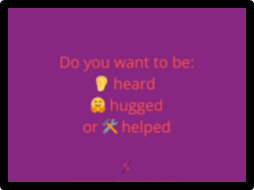
We have all had this type of communication mismatch- you are upset about something that happened that day and the person you are talking to starts coming up with solutions. You feel angry/not supported/unsettled even though you are expressing how you feel. But why?
Sometimes you are in the “feeling stage” and just want to be heard or hugged but the person you are talking to thinks you are in the “solution”/problem solving stage. This type of communication mismatch can further contribute to distance and misunderstanding.
The following is going to sound very basic and very kindergarten/1st grade .. (and ya they teach this stuff now…my 6 year old’s social emotional skills are worlds above my own… thank goodness that gen alpha will be better emotionally equipped than the previous generations. Hopefully that means less money on therapy! $$$ 😊 )….
So back to step 1- figure out what kind of communication you are hoping to have.
Assertive Communication- this is a GREAT way to communicate effectively and ask for what you need hopefully BEFORE you find yourself overwhelmed, overstimulated, or in a rage. Also I promise this gets less formulaic and less awkward the more you practice. I find it helps in the beginning to write them down as you are piecing the parts all together.
The event. Tell the other person exactly how you see the situation or problem.
“the baby is having a hard time feeding at the breast, and I am working closely with lactation and our pediatrician”
Your feelings. Describe how you feel about the situation, express your emotions clearly using “I” statements.
“I feel judged (although I am sure that is not your intention) when you make comments about how great breastfeeding was for you and how it is the best way to feed a baby”
Your needs. Tell the other person exactly what you need from them so they don’t have to guess.
“i am really learning that new motherhood is all about trial and error, and doing the best that I can. In the future, I need you to hold back from commenting on my feeding choices- all babies are different and everyone’s experiences are so different.”
The consequences. Describe the positive impact that your request will have
“that way I will feel more open to share my experiences and we can continue to support each other as new parents”
Other examples:
“The baby is eating every 3 hours at night which requires one of us to be in charge. I feel exhausted and overwhelmed with doing the bulk of the night feedings. I need 4 hours of sleep in a row and I think it would be best if we break the night into two shifts so both of us can get a solid chunk of sleep. This way both of us gets uninterrupted sleep which research shows is essential to our mental health and daily functioning! What do you think?”
“the baby is not able to have her vaccines until she is 2 months old and the momma bear in me--well I feel very protective of her. I feel uncomfortable with you kissing her face and holding her without washing your hands first. In the future, if you would like to hold her, I need you to first wash your hands and please no kissing. That way I will feel safer with her in your care and you will able to spend more time with her”
What will you ask for? Practice setting it up below
The event:
Your feelings: I feel…
Your needs: I need you…
The positive consequence:
Assertiveness in conflict
When you have some type of conflict or feel that your boundaries have been pushed in some way, a key technique that you can use to communicate clearly and productively is to follow this template:
1. Concrete/observable behavior- describe the behavior you observed that you want to address/modify
“when you were scrolling on your phone while I was struggling to both pump and physically care for the baby at the same time”
2. How you felt – name the actual emotions/your feelings that came up as a result of their action
“I felt really angry, frazzled and resentful”
3. Name a reasonable concrete action that would help- give an idea for the behavior you want to see instead
“In the future, I wish you would take the baby while I am pumping”
Other example:
When you came home from work and went straight out for a run after I had been doing non-stop baby care all day (my full time job right now).. I felt really angry and overwhelmed to not receive a break. In the future, I wish you would at least ask if there is something I need first when you get home before you choose to take care of you”
When you [Concrete/observable behavior] :
I felt [Feelings – name actual emotions]:
And in the future, I wish you would [Reasonable concrete/observable behavior]:
The “Good” Mom
Please know that the perinatal (pregnancy and postpartum) period can be filled with lots of feelings- both happy and positive, and many which can feel overwhelming, humbling and raw. This is true for the majority of parents. And a fun fact- nobody really knows what they’re doing for the most part:-) Hang in there, ask for help and find a community to support you.
Lets explore your own feelings about what it means to be a “good mother”
What are qualities of a “good mother”
What messages have you received about what it means to be a “good mother” and where did those messages come from?
Who in your life has modeled qualities of a “good mother,” and what made them stand out to you?
How do you define success as a parent?
How does a “good mother” show love to her children?
How does a “good mother” model taking care of herself while taking care of her children?
Expectations vs Reality
“of course I am going to give baby my breastmilk”
70-90% of new parents struggle with breastfeeding (and lets be honest- feeding a baby in general can be hard/overwhelming) and it can feel wildly emotional and personal. Do NOT let this impact how you view yourself or your self-worth. While you CAN substitute with formula/pumped milk/donor milk etc, there is NO substitute for a healthy and well mom.
The fact that you are even reading this message tells me that you are a great mom. Be gentle and kind to yourself. And remember, your worth is not measured in breastmilk/ounces. If you are struggling with your feelings about feeding, please contact me and lets chat about it.
“Enjoy every moment”
Can you enjoy every moment of your baby screaming in your ear while also peeing on you? Probably not. It is not a reasonable expectation that one can enjoy every moment of anything. If you are not enjoying every moment, that only makes you human. Being a parent, especially a new parent to a newborn, it is hard. And beautiful and humbling, and you’re doing a great job learning about this new world and this new person. Don’t fall into this “mom guilt” trap.
“Sleep when the baby sleeps.”
Do you enjoy having time to pee/cry/eat/shower? Yes there are other things to do during those (gulp) 20 minutes between feeds..
“If you’re feeling sad, just focus on the baby…” “You should be grateful…” “I know your pregnancy/labor/delivery was scary/emergent/traumatic.. but at least you have a healthy baby….”
Yes your baby is important and YOU MATTER TOO! It is hard to take good care of someone else when you are struggling to take care of you (your mental, physical, emotional health).
Recognizing that you can be sad/scared/traumatized and grateful/happy/in love all at the same time is complicated to parse. I think this is a defining feature of being a parent, the ability to recognize that there are many feelings one can have at the same time, even if they are seemingly contradictory to one another.
“You’ll bounce back soon”
There is a new normal that is established. Remember - you created a human with your body. It takes 9 months to grow a human (aka “body building”) and it will take that much time and more to get to this new version of normal.
“Its just hormones..”
Hormones are just one part of the whole picture. There is a lot of change, in every facet of life postpartum and these changes are all occurring at the same time.
Think of all the changes you have endured in this short window of time:
*You physically had a baby, maybe things with your pregnancy/labor/delivery didn’t go how expected, maybe you were scared and are still processing this huge event. Maybe it went great and you are happy and STILL processing this huge event.
*You welcomed a new human into your world, you are recovering physically from that delivery, your sleep is disrupted, your relationships with everyone (partner, other children, parents/in-laws, friends, your pets) might feel different.
*You might be questioning your identity/who you are now, you might be missing aspects of your “old life”/ “past self.”
*You are having to make decision after decision after decision, about everything, all the time! Things that have to do with your baby, housing, food, childcare, finances, and all the other things in life that continue to move forward even though you have had a baby. We do not live in a vacuum and things do not sit still, whether we want them to or not.
AND your hormones dropped off of a cliff, your brain has undergone structural changes that make you BETTER at executive functioning and mental gymnastics and sometimes a little less good at other things (cue mom brain, fogginess)
This is A LOT. Be gentle with yourself. And no, it’s not just hormones.
Now lets take a look at your own expectations about what this next chapter will hold? These could include expectations about feeding, sleeping, sharing tasks with your partner, communication and relationships with loved ones, feelings about identity, bonding, physical healing, postpartum mood changes (depression and anxiety) and many, many more.
What are some of my expectations I have for the postpartum?
What are some more realistic reframes ?
Ex) the moment I see my baby, I will feel bonded/connected to them.
Ex) bonding with anyone can take time and sometimes it is more of a slow burn. I might love my baby, but I might not be in love with my baby right away. And that is ok. We are still getting to know one another!
Some HELPFUL reminders/quotes (yes some are super cliche..) that could become your new mantra to get through some of those inevitable harder times.
Many of the following are from experts, patients/ past members of my postpartum group, yes memes, and some are cringe-y (just bear with me) haha
# Practice makes progress.
# As a parent, it is far more important to be present than to be perfect
# It is okay to love your baby AND miss your old life at the same time.
# We are all just doing our best!
Ok cringe...
# You need to put on YOUR oxygen mask before you can help others
The Postpartum Body:
honestly wtf
There’s this quiet shock that can hit you sometimes even during the pregnancy and definitely after birth — maybe it’s two weeks in, or two months, or when you try to put on your pre-pregnancy jeans for the first time “I don’t feel like myself. Nothing fits. Who am I?”
Your body doesn’t move the same way. Your energy feels different. And maybe your reflection doesn’t quite match the person you remember. Both on the inside and outside.
We talk a lot about “bouncing back,” but the truth is — postpartum isn’t a “bounce” and there is not really a going back. It’s more like a slow unfolding of whatever a new normal will be. This is not easy and it is okay if it feels hard, because it is.
Your Body Has Been Through a Revolution
During pregnancy and birth, every system in your body changes — your hormones, your blood volume, your connective tissue, your core, your sleep, your identity. Nothing goes untouched-there are even fetal cells in your brain!
So when we ask our bodies to “get back” to normal, we’re asking the impossible. It is already doing the hard work in recovering, recalibrating, and finding a new center onto which to tether ourselves.
It is normal if your belly feels soft or your core feels weak. It’s normal if your pelvic floor feels a little unstable or your breasts feel like they belong to someone else. It won’t always be this way; everything is temporary.
When the Feelings Get Dark
Sometimes, the hardest part isn’t the physical changes — it’s the emotional ones.
You might miss your old body, your independence, your control. These feelings don’t make you ungrateful. They make you human.
Postpartum emotions can be heavy, especially when sleep is fractured and the demands feel endless. But if the sadness or hopelessness doesn’t lift, or you find yourself feeling detached or unlike yourself, please reach out to me/us. Talk to your providers, a therapist, come join our postpartum support group!
Ways to Cope and Reconnect
Let go of the timeline. There’s no “should” when it comes to healing.
Move gently. Start small - a walk, a stretch, or a few deep breaths can shift everything.
Rest when you can. Even small pauses count.
Speak gently to yourself. Try replacing “I should look better by now” with “My body is still healing and that’s okay.”
Find your people. Honest connection with others who have walked this crooked path or are currently on this journey- this is the antidote to the isolation that creeps in for so many of us postpartum.
You’re Still Becoming
Postpartum isn’t about getting your “old self” back — it’s about embracing what is becoming.
You are allowed to grieve what’s changed, while also honoring all that you’ve become so far.
Healing isn’t linear. It is a layered and winding path. Remember you are doing your best, there is no perfect, there is only progress. You are a good mom.
Navigating an Evolving Identity
Identity is complex.
Think of all the changes you have endured in this short window of time:
*You physically had a baby, maybe things with your pregnancy/labor/delivery didn’t go how expected, maybe you were scared and are still processing this huge event. Maybe it went great and you are happy and STILL processing this huge event.
*You welcomed a new human into your world, you are recovering physically from that delivery, your sleep is disrupted, your relationships with everyone (partner, other children, parents/in-laws, friends, your pets) might feel different.
*You are having to make decision after decision after decision, about everything, all the time! Things that have to do with your baby, housing, food, childcare, finances, and all the other things that continue to move forward even though you have had a baby. We do not live in a vacuum and things do not sit still, whether we want them to or not.
AND your hormones dropped off of a cliff, your brain has undergone structural changes that make you BETTER at executive functioning and mental gymnastics and sometimes a little less good at other things (cue mom brain, fogginess)
*You might be questioning your identity/who you are now, you might be missing aspects of your “old life”/ “past self.”
This is A LOT. Be gentle with yourself. And no, it’s not just hormones.
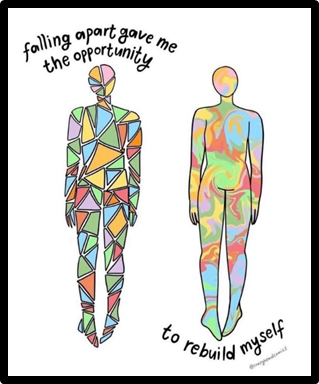
How do you see your identity evolving as a new mom/parent?
How will you stay curious about who you’re becoming? (versus holding yourself to a fixed idea of what a “good mother” should be?)
What role models of “whole” mothers (those with full, complex identities) do you admire and why?
What values do you want to carry into this new phase of life?
How do you want your baby to see you- not just as mother, but as a person?
How will you continue to nurture and expand your sense of purpose as you delve into motherhood?
The Masks We Wear Postpartum
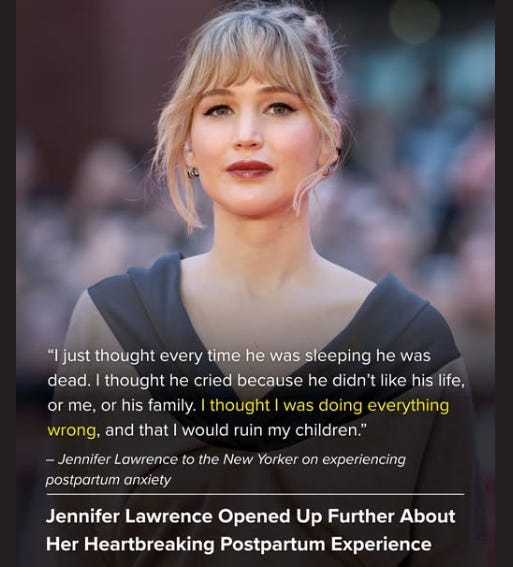
In the early days/weeks after birth, most of us are handed a silent assignment: look like you’re okay and project “all is well here.”
We put on fresh athleisure, smile for visitors, and tell everyone, “we’re fine.”
We text back heart emojis. We post the photo of our baby swaddled just right, while we are behind the camera hidden behind the mask that stays on and on and on.
The mask that says I am holding it together enough to get through this social interaction/doctor’s appointment/aunt dropping off food, but it is also the mask that hides the tears that come when you look into the mirror alone in your bathroom or are awake at 2am with a baby that just doesn’t want to sleep. The mask that covers the ache of a body that no longer feels like your own, or the quiet fear that you might never feel like yourself again.
Behind the mask
Postpartum is supposed to be a time of joy and connection with our little one, as well as a time for the healthy struggle in learning how to be a mom. And sometimes it is. But for many, it can also be a time of isolation, anxiety, depression, and the questioning of an evolving identity. It’s a lot. And sometimes it is too overwhelming to process and it seems easier to just portray “I’m fine.”
So we hide.
We hide because we think everyone else is coping better than us. We hide because displaying our vulnerability or needing help feels like a failure. We hide because no one told us how normal it is to feel this undone, this scared, this untethered.
But behind every mask is a woman craving permission to tell the truth. To someone.
When you hear, “Me too.”
Something powerful happens when another person looks at you and says, “Me too...I feel like no one warned me…I’ve been there too”
Those two words can be life-saving. They dissolve the isolation and release something to the universe that screams “we’re not broken, we are humans just doing our best. We are becoming.”
When we share our stories, especially the messy, unfiltered parts, we give each other the oxygen to get better. We transform that silence and shame into solidarity.
You might never know the impact of your honesty- the way your words might make another person feel less alone, less ashamed, less afraid. But I promise, these seemingly small acts/words matter.
You don’t have to tell the whole story to everyone. You just have to be honest with someone. Someone who feels safe- maybe it’s a friend, a partner, a postpartum group, a provider, or a fellow mom sitting near you at story time. Saying out loud, “This is harder than I expected,” is an act of courage.
Each time we speak truth instead of hiding it, we loosen the grip of shame. We remind each other that we’re in this together- surviving, healing, learning, becoming.
Please know this:
You are not alone. And you are allowed to take the mask off.
If you see another mom wearing hers too tightly, try those two words - “me too.” These are words that might just save a life.
Nurturing the Partnership
“We are on the same team” “We share the same goals”
“We are on the same team” “We share the same goals”
“We are on the same team” “We share the same goals”
“We are on the same team” “We share the same goals”
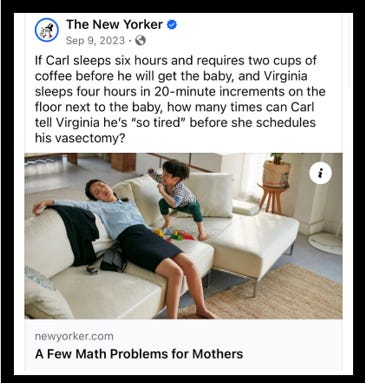
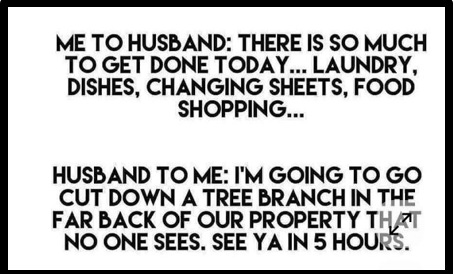
In a 2017 study, 67% of parents reported a decline in their marital satisfaction. The Gottman Institute “love experts” -(sorry for the Frozen reference…if you didn’t know that reference, I’ll give you 3 years and then you will😉) -have come up with tangible and concrete ways to help improve marital/partner satisfaction after a baby and much of the following is adapted from their research. Obviously, these tips do not replace therapy, couples or individual; and of course can be used in conjunction with regular therapy. And truly, life/adulthood/parenthood should just come with therapy anyhow!
1. Turning towards each other with daily rituals of connection. These are small and intentional moments allowing you to show love and support.
· Your greeting- take a moment to embrace each other and share a genuine hello
· At a quiet moment in the evening- share one thing that you appreciate about each other from that day.
· Have some connection time (perhaps without scrolling on phones sitting next to each other on couch…ya I know)
· Hug or kiss for 7 seconds. Apparently 7 was the statistically significant number of seconds you need to hug/kiss to remain connected.
2. Make a fondness jar- helps reinforce positivity and reminds you of the reasons you fell in love.
· You and your partner should each make your own jar.
· Write one thing you appreciate about your partner a few times per week and place in their jar
· Randomly select a note from the jar to read😊
3. Weekly “Back to Back” conversations and “the state of the relationship” - Essentially- have an intimate conversation not facing each other (no forced eye contact!) or visual distractions like body language. This might help with being more open and less guarded.

The state of the relationship- It is going to feel awkward and formulaic at first. Here are some baseline rules: keep the content/focus to the last 7 days only. Don’t try to fix any issues, just listen and seek to understand/be curious about your partner’s viewpoint. Let things simmer and choose a different time to go back and work on solutions if needed.
· “In the last week, I think what has been going well in our relationship is…..”
· “In the last week, something I am finding difficult in our relationship is ……”
· “In the last week, I felt really loved/cared for/connected to you when you ….”
· “What I appreciate most about you is...”
· “Something I’m personally struggling with lately is…”
· “A fear or insecurity I have is…”
· “My biggest hope or dream for us is…”
· “Something I don’t think you know about me is…”
The Family Calendar
You and your partner should set a regular weekly time to review the specifics of what you need to do in the coming seven days.
Go day-by-day to clarify each of your perspectives about who needs to be where, when, and what the specific resources that are needed
1. Review the next 7 days of a shared calendar (google, white board, etc)
2. Once you’ve completed the day-by day review, circle back and add into your schedule the times and ways in which you’ll be engaging in the following specific areas:
Personal Recharge Time, Exercise, Social Support and Connection Time.
You BOTH need to make time to keep yourselves and your union healthy. Baseline rules- agree to respect each other’s choices. You two will be the experts on how often these events are happening for each one of you. Assume good intentions, be fair, and stay curious.
Holiday Boundaries Postpartum: “No.” is a full sentence.
The holidays are typically painted as warm and cozy with a sprinkling of sparkly magic and family connection (insert rainbow unicorn emojis here). However postpartum, they can also feel like a perfect storm of unrealistic expectations, exhaustion, unsolicited advice, and overstimulation. Even for those not postpartum, the holidays can just be tough for so many people for a multitude of different reasons.
Postpartum- you’re recovering, you’re probably sleep deprived, you’re navigating truly one of the biggest identity transitions of your life, and suddenly, everyone wants a piece of you and your baby. If you’re feeling torn between wanting connection and desperately needing quiet… you are not alone. And you are not wrong.
The holidays tend to be one of the more “permissive” times for boundary violations-often from loving family members who simply don’t understand (or don’t remember) what it is like to be postpartum, especially nowadays. (Even my own mom has said that motherhood in 2025 is way harder than it was in the 80s/90s).
That’s why boundary-setting isn’t selfish, it’s survival. Your mental and emotional capacity matters.
Even 20–30 minutes with family can be meaningful without draining you or overstimulating your baby. Maybe that means you stop by for appetizers or come by only for dessert. Maybe that means Facetiming for a few minutes during dinner instead of actually swinging by.
“We’re keeping the holidays low-key this year so we can rest and recover. Thanks for understanding.”
“We’d love to stop by for a short visit, but we’ll have to keep it brief so I can rest and keep baby on track.”
Managing “the noise”
Holiday gatherings are basically magnets for comments about:
your baby
your body
your feeding choices
your sleep routines
your parenting
You’re allowed to shut that down-kindly and firmly. And you are not required to defend your choices.
Nobody needs to hold your baby (unless you want them to)
People love babies. They also forget babies are actual humans-with immune systems, rhythms, and limits.
If you feel protective, anxious, or just don’t want to pass your baby around, that is OK. The best (and hardest part) about being a mom/parent- YOU are the expert on your baby and you get to make the decisions.
“Baby is feeling overstimulated, so we’re keeping them close today.”
“We’re limiting holding to just mom and dad right now.”
“We’ll let you know when baby is ready for a snuggle.”
Your comfort is more important that someone else’s disappointment. “You are not responsible for another person’s reaction to a situation” (as told to me by my 7 year old child…)
“No.” (it is a full sentence and needs no explanation)
Postpartum moms and just women in general, often feel pressure to justify every boundary with a defense attorney level statement. You don’t have to.
“That won’t work for us this year.”
“We’re prioritizing rest and recovery.”
“Maybe next year.”
Feeding Boundaries
Breastfeeding, pumping, supplementing, combo-feeding… truly whatever your reality is deserves respect and privacy.
You don’t need commentary or an audience.
“Please excuse us, I’m going to feed baby in a quieter space.”
“We’re following baby’s cues, so we’ll take breaks as we need to.”
Everyone else’s commentary is just noise…
Holidays might look different
Traditions evolve when families grow. This might be a season of softness, quiet, staying in, etc. This might be a season of small intimate meet ups rather than big gatherings.
Postpartum is tender and temporary. Your healing (mind/body/soul) is not optional. Listening to your body is not optional.
Your Mental Health > Tradition
If anticipating a holiday event gives you a pang of anxiety, makes your chest tighten or your heart beat faster (whew I am not postpartum and definitely feeling the above), listen to your body. You are responsible for protecting yourself in this tender, beautiful season. You are not responsible for managing everyone else’s emotions/reactions to your decisions around the holidays.
The holidays will come again. Your postpartum season is happening right now.
Your baby needs a present and grounded mom/parents.
And please remember, boundaries are not walls. I like to think of them more as doorways, where you get to choose who/what is coming through. Doorways open to connections that feel safe, and close gently on anything that doesn’t. This year, let your boundaries and decisions be an act of self-love, love for your baby, and love for this new little family of yours.
Struggling vs Suffering
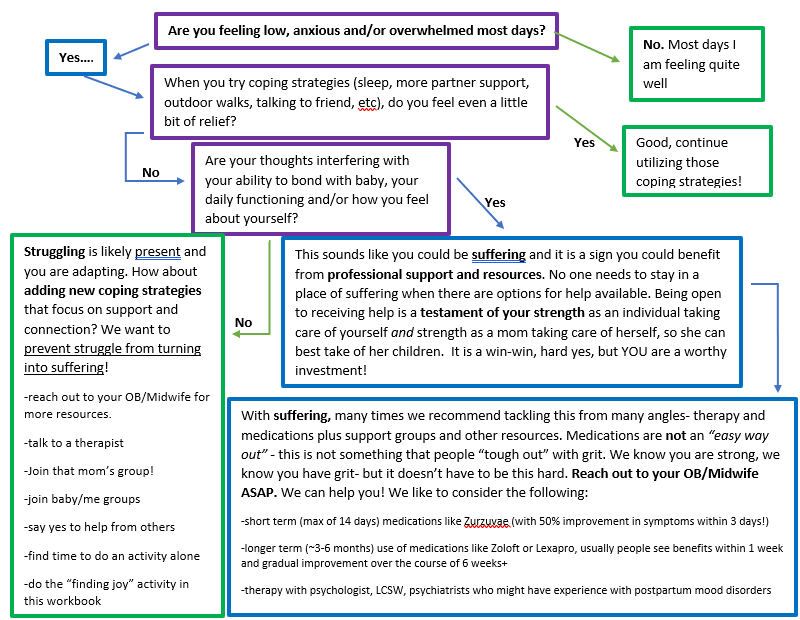
Struggling is a part of growth- it is how we learn, strengthen skills, and move forward. Usually this struggle is healthy (grr…), albeit hard. We come out stronger and more confident in the end. And this struggle is true postpartum as well. We are learning how to feed our babies, how to function with less sleep, learning how to best communicate needs, navigating changing relationships, and our own evolving identity etc. This type of struggle means you are facing challenges AND still moving forward by learning and adapting.
Sometimes what starts out as healthy struggling can start to dip into a different animal, it can slowly (or quickly) turn into suffering: doing the same things over and over without the feeling of it ever getting better, when the emotional and physical load becomes overwhelming, and repeating the same efforts do not lend to a relief or an improvement. Suffering drains our energy, our spirit, might impact the bonding with our babies, and our ability to take care of ourselves.
It can be difficult to see that struggling and suffering are different so let’s use the flowchart below to pause, reflect and decide when it is time to seek a new approach and find more support.